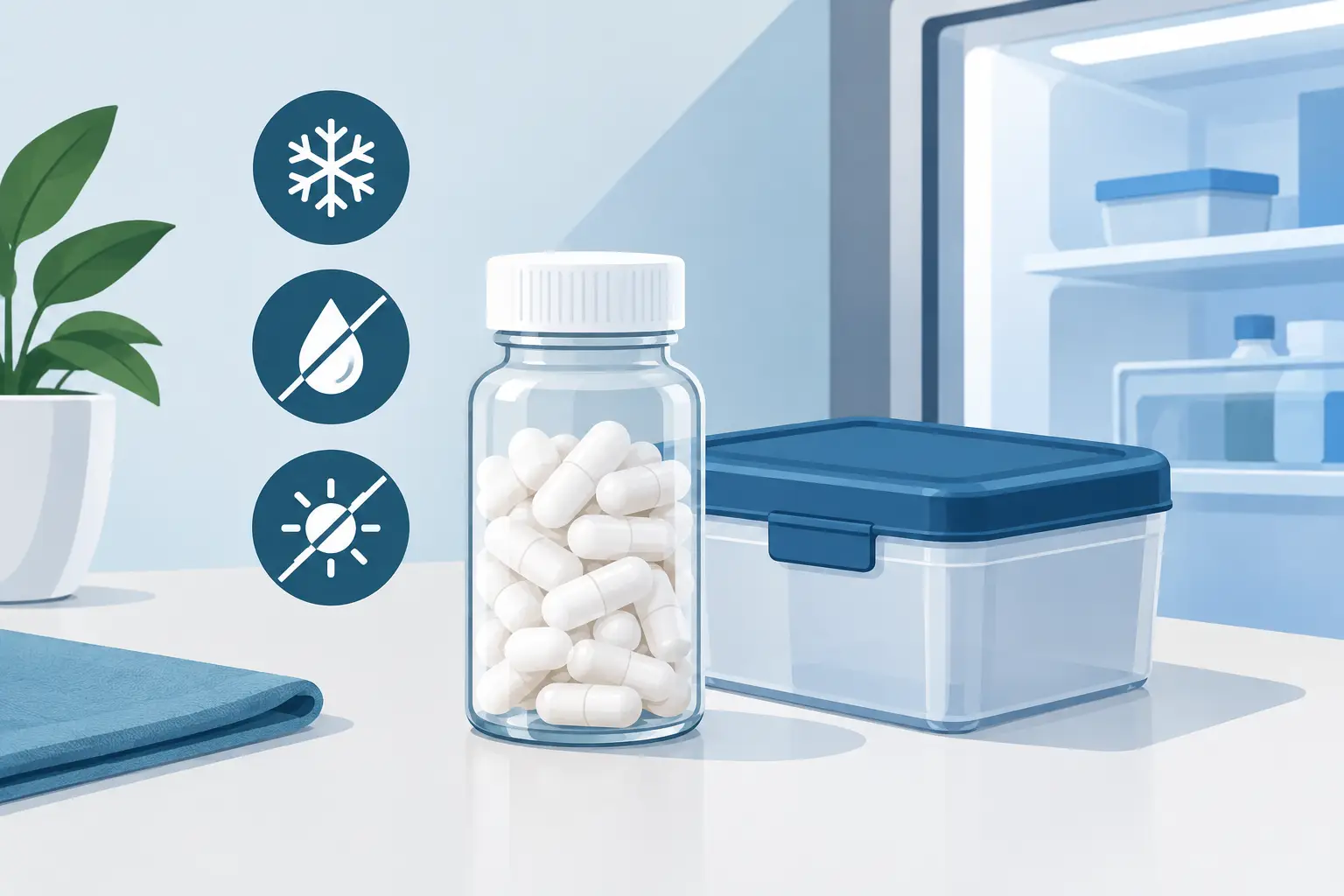
A bottle left on a sunny windowsill, in a steamy bathroom or loose in a gym bag is exposed to exactly what it does not need: heat, moisture and avoidable handling. Knowing how to store mk 677 properly helps keep the product in the same condition as when it arrived, right through to the labelled expiry date.
The rule is simple: follow the product label first, then give the bottle a cool, dry, dark and secure place at home. There is no advantage in overcomplicating it. Good storage is mostly about avoiding the common mistakes that gradually affect tablets, capsules or liquid formulations.
How to store MK 677 properly at home
For most MK-677 products, a cupboard or drawer in a dry room is the sensible choice. Choose somewhere away from direct sunlight, radiators, boilers, hobs and other heat sources. A bedroom drawer or a high kitchen cupboard well away from the cooker will usually work better than a bathroom cabinet or a shelf beside a window.
Room temperature is generally the target unless the label says otherwise. That means a stable indoor environment, not a car, conservatory, shed or garage where temperatures can swing sharply between day and night. Heat can be particularly hard on liquid products, while repeated changes in temperature can create condensation around packaging.
Keep the container tightly closed whenever it is not being handled. Do not leave a lid resting loosely on a worktop while you get distracted. The less humid air and household dust that enter the bottle, the better. This matters even more in the UK winter, when people may move products between cold deliveries, heated rooms and damp spaces.
Keep it in the original packaging
The original bottle is there for more than appearance. It carries the batch details, expiry date, instructions and product identification. It is also the packaging selected to protect the contents under normal storage conditions.
Avoid decanting MK-677 into an unlabelled pot, a weekly pill organiser or another bottle for long-term storage. It may seem convenient, but it creates two problems. First, you lose the information needed to check the product and its date. Second, the new container may not protect against light or moisture in the same way.
If you use a tablet organiser for short-term convenience, only move the amount needed for a short period and keep the main product in its sealed original bottle. Never mix different products in the same container. Clear labelling is one of the easiest ways to avoid a preventable mistake.
For liquid MK-677, keep the cap or dropper clean and secure after each use. Do not allow the dropper to touch surfaces, and do not return excess liquid to the bottle. Contamination is not something to gamble with.
Moisture is usually the biggest avoidable problem
Bathrooms are poor storage spaces for most supplements and research compounds. Hot showers raise humidity, and that moisture does not disappear just because the cabinet door is shut. The same applies to a kitchen cupboard directly above a kettle, dishwasher or cooker.
Tablets and capsules can soften, clump, crack or discolour when moisture gets involved. Liquids can also be affected by poor storage conditions, particularly when the bottle is repeatedly opened in a warm, humid room. If your bottle contains a small desiccant sachet or canister, leave it inside. It is there to manage moisture, not as packaging waste.
Do not add rice, cotton wool, tissue or another improvised material to the bottle. These do not create a controlled storage environment and can introduce fibres or contamination. A dry cupboard and a properly closed lid are the better answer.
Do not refrigerate it unless the label says to
Refrigeration sounds like extra protection, but colder is not automatically better. A fridge can expose a bottle to condensation as it moves in and out, while frequent temperature changes can be less useful than stable room-temperature storage.
Only refrigerate MK-677 if the specific label or supplied instructions tell you to do so. The same goes for freezing: never freeze a product unless the manufacturer explicitly directs it. If a delivery arrives cold during winter, that does not mean it needs to live in the fridge. Let it settle at normal room temperature in a dry place before storing it as labelled.
This is one area where the product format matters. Different formulations can have different requirements, so the bottle in your hand always takes priority over general advice.
Travel and gym bags need a bit more thought
Taking a bottle away for a weekend or keeping it in a gym bag can be practical, but it increases the chances of heat exposure, crushing and lost labelling. A car is the worst place to leave it. Even on a mild day, temperatures inside can rise quickly when the sun is out. On colder days, overnight temperatures can drop considerably too.
For short journeys, keep the product in its original sealed container and place it in a small protective pouch, out of direct sunlight. Bring it indoors when you arrive. Do not leave it in a locker, boot or glove box for hours, and do not carry it loose beside water bottles, toiletries or food.
If you are flying or travelling abroad, check the rules at your destination before taking any product with you. Original packaging and clear labelling are essential, but they do not replace your responsibility to understand local requirements.
Check the product before using it
Good storage does not mean ignoring what is in front of you. Before handling a product, take a moment to inspect the packaging and contents. Check that the seal and cap are intact, the label is readable and the expiry date has not passed.
For tablets or capsules, look for obvious changes such as unusual odour, marked discolouration, crumbling, sticking or signs of damp. For liquids, look for leakage, a damaged seal, unexpected cloudiness, particles or a major change in colour or smell. Some formulation-specific variation can occur, so do not make assumptions based on appearance alone. When in doubt, stop using the product and seek advice from the supplier or a qualified healthcare professional.
Never use a product that has clearly been exposed to water, intense heat, a broken seal or contamination. Trying to save a few pounds is not worth the uncertainty.
Store it securely, not just neatly
MK-677 should be kept out of sight and reach of children, pets and anyone for whom it was not intended. A high cupboard may be enough in some homes, but a locked cabinet is the stronger option where children or visitors are around.
Keep it separate from everyday medicines and household products. This reduces the risk of mix-ups, especially when bottles look similar or labels become obscured over time. Retain the outer packaging if it contains useful batch or storage information.
MK-677 is not a licensed medicine for general use in the UK. Do not treat storage guidance as medical guidance, and do not share a product with anyone else. If you have a health condition, take prescribed medication, are pregnant or breastfeeding, or have concerns about use, speak to an appropriate healthcare professional first.
A simple storage routine that works
When your order arrives, check the seal, batch information and label, then put the bottle straight into a cool, dry cupboard or drawer. Keep the lid tight, leave any desiccant in place and avoid moving it around unnecessarily. Before using it, check the date and make sure the product still looks and smells as expected.
That is the standard worth keeping: clear label, sealed bottle, stable conditions and no guesswork. Store it properly from day one, and you give the product the best chance of remaining in good condition for its intended shelf life.