
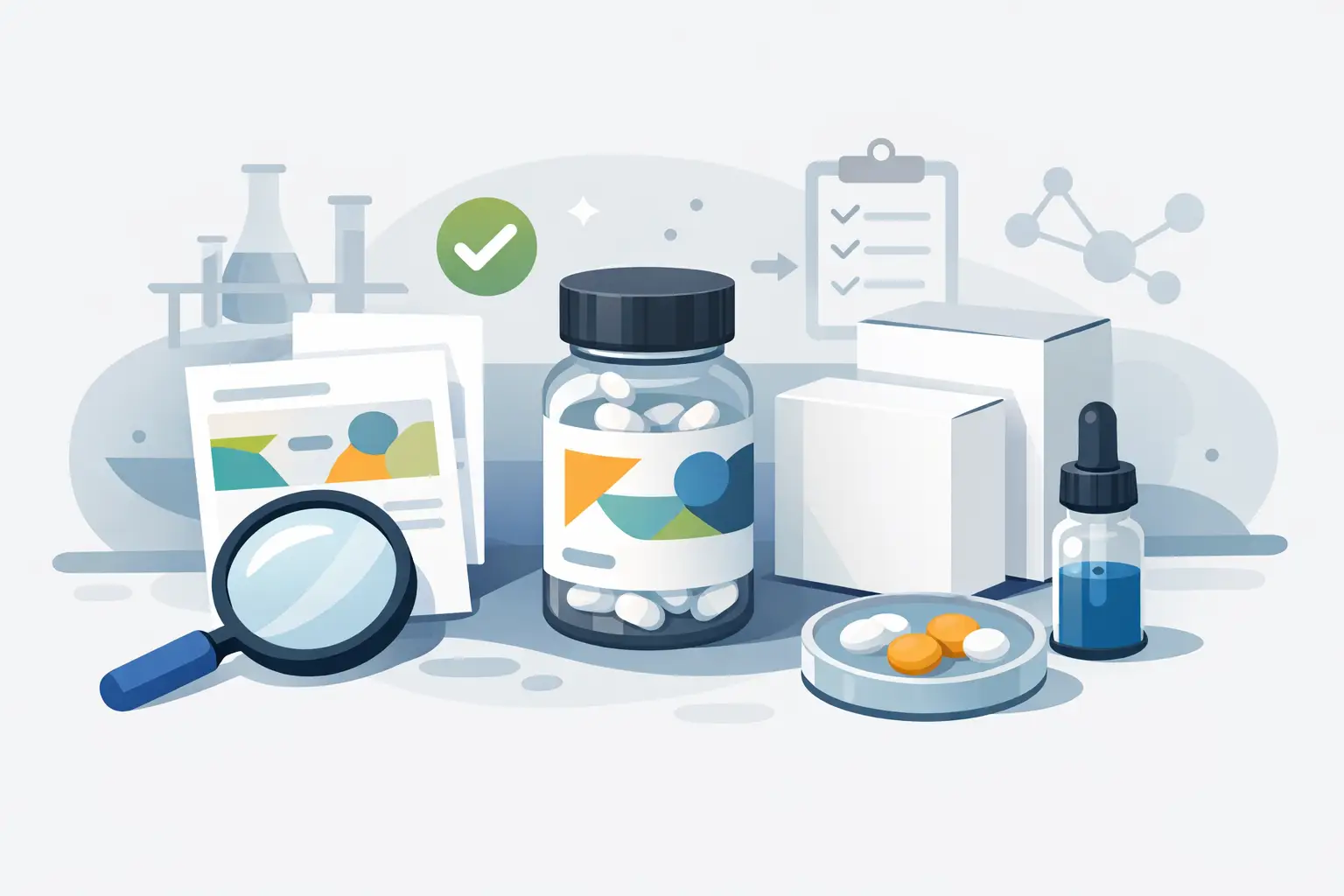
One of the quickest ways to spot a weak seller is poor mk677 product labelling. If the front of the pack tells you very little, the dosage is vague, or the numbers do not line up from one batch to the next, that is not a small detail. It is usually a sign of a bigger problem behind the scenes.
In this category, buyers are not looking for glossy packaging for the sake of it. They want clarity. They want to know what they are buying, how much is in it, and whether the information on the label stays consistent every time they reorder. That is where trust starts.
Why mk677 product labelling matters
Labelling is not just about presentation. It is about removing guesswork. A clear label gives the buyer a fast read on strength, quantity, serving size and basic product identity. A weak label does the opposite. It creates friction before the product has even been opened.
This matters more with specialist products than it does with mainstream supplements. Buyers in this space tend to be more informed, more detail-focused and less forgiving of sloppy information. If a label looks rushed, incomplete or inconsistent, many will assume the same about sourcing and quality control.
There is also a practical side to it. When product labelling is clear, it becomes easier to compare options, track usage and reorder with confidence. When labels are vague, buyers are left second-guessing dose amounts, bottle contents or whether the latest order matches the last one.
What good MK677 product labelling should include
A good label is not overloaded. It is simply precise. The basics should be easy to find without hunting around the bottle or pouch.
First, the product name should be unambiguous. If a seller wants to look transparent, the identity of the product should not be buried under branding. Buyers should be able to see at a glance what they are purchasing.
Second, the amount per serving needs to be stated clearly. Not hidden in tiny print, not softened by vague wording, and not dressed up to look stronger than it is. If the dose is 10mg, 20mg or another amount, that should be plain.
Third, the total quantity in the container should make sense alongside the per serving amount. This is where weak labelling often shows itself. A bottle may claim a certain strength, but the maths behind the total number of servings does not always stack up. Experienced buyers notice that straight away.
Fourth, there should be consistency in formatting and information across batches. If one order arrives with one style of label and the next arrives with different strength details, different language or a different presentation of quantity, that raises questions. Sometimes a label update is harmless. Sometimes it points to a supplier who is making things up as they go.
The red flags buyers should not ignore
Some labelling problems are obvious. Others are more subtle. Both matter.
The most obvious issue is vagueness. If the label leans on generic terms and avoids direct statements about what is inside, that is a warning sign. Clear sellers do not need to dance around the basics.
Another red flag is inconsistency between the label, the product listing and the bottle contents. If the listing says one thing and the bottle says another, the buyer is left deciding which version to trust. That should never happen.
Watch for poor print quality too. A rough label on its own does not prove a bad product, but it does suggest a lack of care. In a category where trust is already hard won, details matter. Sharp print, readable text and stable branding all help show that the product was packed and presented properly.
Then there is overclaiming. When labels are packed with inflated promises or exaggerated language, it usually says more about the marketing than the product. Serious buyers tend to prefer plain facts over hype.
Why consistency matters more than clever design
There is nothing wrong with a clean-looking bottle. But design should support clarity, not replace it. A polished label means very little if the key details are missing or confusing.
For repeat buyers, consistency is usually more valuable than style. They want the same strength, the same pack format and the same information layout each time they come back. Familiarity reduces hesitation. It also makes it easier to spot if something has changed.
That is one reason specialist sellers tend to stand out from broad catalogue shops. When a business focuses on one niche rather than trying to sell everything to everyone, it is easier to keep presentation and product information tight. That focus often shows up first on the label.
How buyers in the UK tend to judge labels
UK buyers shopping in this space are usually making a quick credibility check before they buy. They are not reading labels for fun. They are scanning for reassurance.
They want to know whether stock is held domestically, whether delivery will be straightforward, and whether the product they receive will match what was advertised. Labelling plays into all of that. A clean, professional label suggests the seller has taken the time to build a reliable operation rather than throwing stock together and hoping for sales.
It also helps when pricing is stable. If labels keep changing while prices swing all over the place, buyers often read that as a sign of an unstable supply chain. Clear product labelling on its own is not enough, but it fits into a bigger picture of consistency.
MK677 product labelling and buyer confidence
The strongest reason to care about mk677 product labelling is simple. It affects confidence before and after the sale.
Before the sale, the label helps a buyer decide whether the product looks dependable enough to order. After the sale, it helps confirm whether the order met expectations. If those two stages match, trust grows. If they do not, that customer often does not return.
This is where many sellers lose people. They focus heavily on getting the first click and not enough on what happens when the bottle lands on the doorstep. If the label feels vague or inconsistent in hand, the whole buying experience takes a hit.
On the other hand, when the pack is clear, the dosage is easy to read and the information is exactly where it should be, the experience feels tighter. More settled. Buyers remember that.
What a specialist seller gets right
A specialist seller should understand that product labelling is not an afterthought. It is part of the offer. The same goes for stock control, fair pricing and tracked delivery. They all feed the same outcome – making the purchase feel more reliable.
That is the difference between a seller that knows the category and one that is simply passing through it. People buying MK-677 are often dealing with a market that has had too much inconsistency for too long. They do not need more noise. They need product information that is direct and repeatable.
This is exactly why brands like MK677 Direct UK lean so heavily on transparency and consistency. Those are not decorative claims. They are the practical fixes for the complaints buyers keep having with weaker vendors.
What to check before you place an order
A buyer does not need to overcomplicate this. A few simple checks usually tell you enough.
Look at whether the product name is clear, whether the dosage is stated plainly, and whether the total quantity makes sense. Check that the same information appears consistently across the listing and the packaging. Then ask yourself one direct question: does this look like a product presented by a specialist, or by someone hoping you will not look too closely?
If the answer feels uncertain, it probably is.
Good labelling will not fix every issue in the category, but it does tell you a lot about the standards behind the bottle. And for informed buyers, that is often the difference between ordering once and ordering again.



Pingback: MK677 Ingredients List: What Should Be on It? – MK677 Direct UK
Pingback: A Guide to MK677 Transparency for UK Buyers – MK677 Direct UK
Pingback: Best MK677 Buying Tips for Safer UK Orders – MK677 Direct UK
Just saw phplus pop up, anyone know anything about it? Is it worth a visit? I’m always on the lookout for a new place to play. Let me know your thoughts! Here’s the link: phplus
Just got on whinph7 and it’s got an interesting concept. I like the overall design!
Anyone tried PHJL Login yet? Setting up my account was super easy. The interface is clean. Hoping for some lucky spins! Give it a shot: phjllogin
Really sleek design and very user friendly. I can access my account in seconds without any hassle. phplusloginapp is simply the best.
If you love slots then this is the place to be. The variety of games is insane and the bonuses are generous. Love taipan77slot.
A very solid platform for anyone who loves sports betting and casino games. Everything is well organized. I’m sticking with br422bet.
Really impressed with the rewards here. I had a great run yesterday and the payout process was surprisingly fast. Big thanks to brown777
Really impressed with the variety of games available. There is always something new to try and the customer support is very helpful. High marks for iderabet88.
Such a fun way to spend my free time. The games are fair and the rewards keep me coming back for more. Go check out 6jiligames now.
This place has a great selection of games and the rewards are actually reachable. It is my go to spot for some weekend fun. Check out bd3777bdt.
The spin mechanics here are so satisfying. I’ve had a few lucky streaks already and the customer support is actually helpful. Cheers to inyesspin!
The graphics are stunning and the gameplay is just seamless. I am really enjoying my time on novinetcasino.