
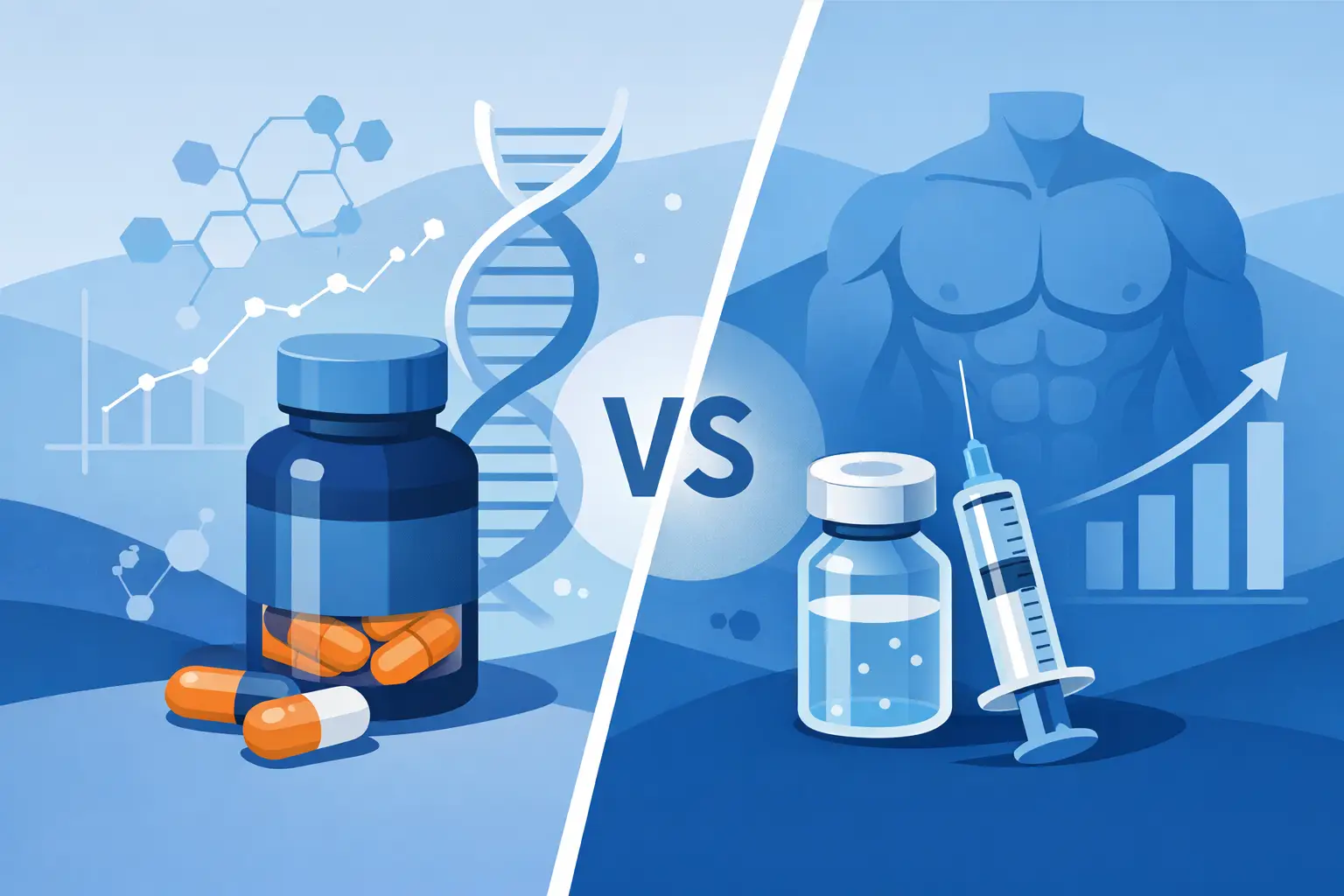
MK677 vs growth hormone is not a simple contest between a tablet and an injection. Both are associated with growth hormone signalling, but they get there in different ways, carry different risks, and sit in very different legal and medical categories. If you are weighing them up, the useful question is not which sounds stronger. It is which mechanism, trade-off and level of medical oversight you are actually prepared to deal with.
MK677 vs growth hormone: the core difference
Growth hormone, often called GH or human growth hormone, is the hormone itself. Prescribed GH treatment supplies a manufactured version of the hormone directly, usually by injection. In legitimate medical settings, it is used for specific diagnosed conditions under specialist supervision.
MK-677, also known as ibutamoren, is not growth hormone. It is a ghrelin receptor agonist and growth hormone secretagogue. In plain English, it signals the body to release more of its own GH and can also raise insulin-like growth factor 1, or IGF-1.
That distinction matters. Exogenous GH bypasses the body’s normal release signal. MK-677 relies on the pituitary’s capacity to respond. Neither route makes the decision risk-free, but they should not be treated as interchangeable products with identical outcomes.
For many physique-focused buyers, MK-677 is appealing because it is taken orally and does not involve injections. Growth hormone has a long history in medicine, but non-medical use adds major concerns around source quality, counterfeit products, infection risk from poor injection practice, and the need for a prescription.
What people are usually trying to achieve
The comparison often comes up around recovery, sleep, body composition and training progress. GH signalling is involved in tissue maintenance, metabolism and recovery processes, so it is easy to see why both compounds attract attention in performance circles.
But expectations need keeping in check. Neither MK-677 nor growth hormone is a shortcut around poor training, low protein intake, inconsistent sleep or a diet that does not match the goal. Changes in scale weight can be especially misleading, as water retention may show up before any meaningful body-composition change.
MK-677 is commonly discussed for its potential effect on sleep quality, appetite and recovery. Those same effects can be a downside. A person trying to maintain a strict calorie target may find a stronger appetite unhelpful rather than beneficial. Someone who is prone to fluid retention may not like the way they look or feel when weight rises quickly.
Growth hormone is often viewed as the more direct and potent option because it supplies GH itself. That does not mean it is automatically the better choice for a healthy adult pursuing aesthetic or athletic aims. Response varies, side effects can be significant, and using prescription medication without a genuine clinical indication is a poor substitute for proper medical care.
The timing and release pattern are different
The body releases growth hormone in pulses, with a substantial proportion linked to sleep. MK-677 may increase GH release through the body’s own signalling system, but it does not simply recreate a perfectly natural hormonal profile. It can also have prolonged effects on related markers such as IGF-1.
Injected GH produces an externally controlled exposure pattern that depends on the prescribed product and regimen. In a medical setting, this is managed around a diagnosed need, blood work, symptoms and follow-up. Outside that setting, the supposed precision can become a false sense of security.
The bottom line is simple: MK-677 stimulates a pathway, while growth hormone replaces or adds the hormone directly. That is a meaningful biological difference, not just marketing language.
Side effects and the trade-offs people miss
The most common mistake in MK677 vs growth hormone discussions is focusing only on potential upside. The smarter approach is to ask what can go wrong, what can be monitored, and whether the risk is justified in the first place.
MK-677 may increase appetite and can cause water retention, tiredness, numbness or tingling, and joint discomfort in some users. It may also affect blood glucose control and insulin sensitivity. That point deserves more attention than it gets. If you have diabetes, pre-diabetes, a history of poor glucose control, or strong family risk factors, this is not a casual consideration.
Growth hormone can also cause fluid retention, joint pain, tingling in the hands, headaches and effects on glucose metabolism. Excessive exposure over time is associated with more serious health concerns, including changes to soft tissue and strain on the body’s metabolic systems. Medical GH therapy is supervised for a reason.
Neither option should be assumed safe because it is popular in gym circles. Individual risk changes with age, existing health conditions, other medicines, body-fat level, stimulant use, alcohol intake and family medical history. If symptoms such as persistent swelling, severe headaches, visual changes, chest pain, breathing difficulty or marked changes in mood occur, seek medical advice promptly.
Appetite is not a minor detail
For some people, appetite is the deciding factor. A hardgainer trying to eat enough may see increased hunger as useful. A person cutting for a holiday, photoshoot or competition may see it as a direct threat to adherence.
More appetite does not automatically mean better lean mass gains. It can just as easily mean higher calorie intake, poorer food choices and unwanted fat gain. The best outcome still depends on the basics: a controlled diet, sensible training volume and enough recovery.
UK legality, sport and product confidence
Growth hormone is a prescription-only medicine in the UK. It should be prescribed and monitored by an appropriately qualified clinician for a recognised medical need. Buying alleged GH from unverified sources creates obvious problems: you cannot reliably know whether it contains the stated ingredient, whether it has been stored correctly, or whether it is sterile.
MK-677 is not licensed as a medicine for general consumer use in the UK. Its regulatory position is not the same as a standard food supplement, and buyers should be wary of sellers making medical promises, claiming guaranteed results or providing vague labels. Clear product information matters because this category has a history of inconsistency and overstatement.
If you compete in tested sport, assume neither route is suitable without checking the current anti-doping rules for your governing body. Growth hormone is prohibited in sport, and substances that stimulate GH-related pathways may also fall within prohibited categories. A failed test can affect far more than a training block.
For buyers considering MK-677, confidence starts with practical checks. Look for transparent labelling, batch consistency, straightforward pricing and a seller that can clearly explain what is being supplied. UK-held stock and tracked domestic delivery may make the buying experience easier, but they do not replace personal due diligence or medical judgement.
Which one makes more sense?
If you have a suspected hormone deficiency, the answer is neither product bought on impulse. Speak to a GP or relevant specialist. Symptoms such as chronic fatigue, reduced libido, unexplained body-composition changes or poor recovery can have many causes, and self-treating can delay the right diagnosis.
If the question is purely about convenience, MK-677 is the oral option and growth hormone requires injections. If the question is medical legitimacy, prescribed GH has an established role for specific conditions, while MK-677 is not a licensed general treatment. If the question is performance, there is no honest one-size-fits-all answer because the potential benefit must be weighed against appetite changes, fluid retention, glucose concerns, cost, legality and sporting consequences.
The strongest decision is usually the least dramatic one: be clear about your goal, do not confuse water weight with progress, and do not let gym folklore make a hormone-related choice sound routine. Reliable information and honest labelling are worth more than exaggerated promises.



The app is super responsive and makes betting on the go so much easier. I love the clean layout of mostplaybetapp
Finally found a reliable link to get the app. The download was smooth and the installation didn’t take long. Definitely the best way to get megaparidownload working on my phone.
If you love slots you cannot miss this one. The hit rate seems much better here than on other platforms I have used. Give balislot88 a try.
I’ve tried a few platforms but this one is really smooth. The interface is intuitive and the payouts are fast. Definitely recommend phjiliapp to anyone looking for a reliable spot.
The game variety here is exactly what I was searching for from classic table games to unique local favorites. The community feels welcoming and the support team actually remembers your name. Reliable payouts and zero lag during peak hours make this a daily go to. y9999games
I’ve been trying a few different platforms lately and this one really stands out. The interface is smooth and the payouts are fair. Definitely worth a shot for anyone looking for a reliable spot. Check out batikslot77
Best experience I have had in a long time. Everything from the deposit to the actual gaming is handled professionally. I highly suggest vnzx888 to everyone.