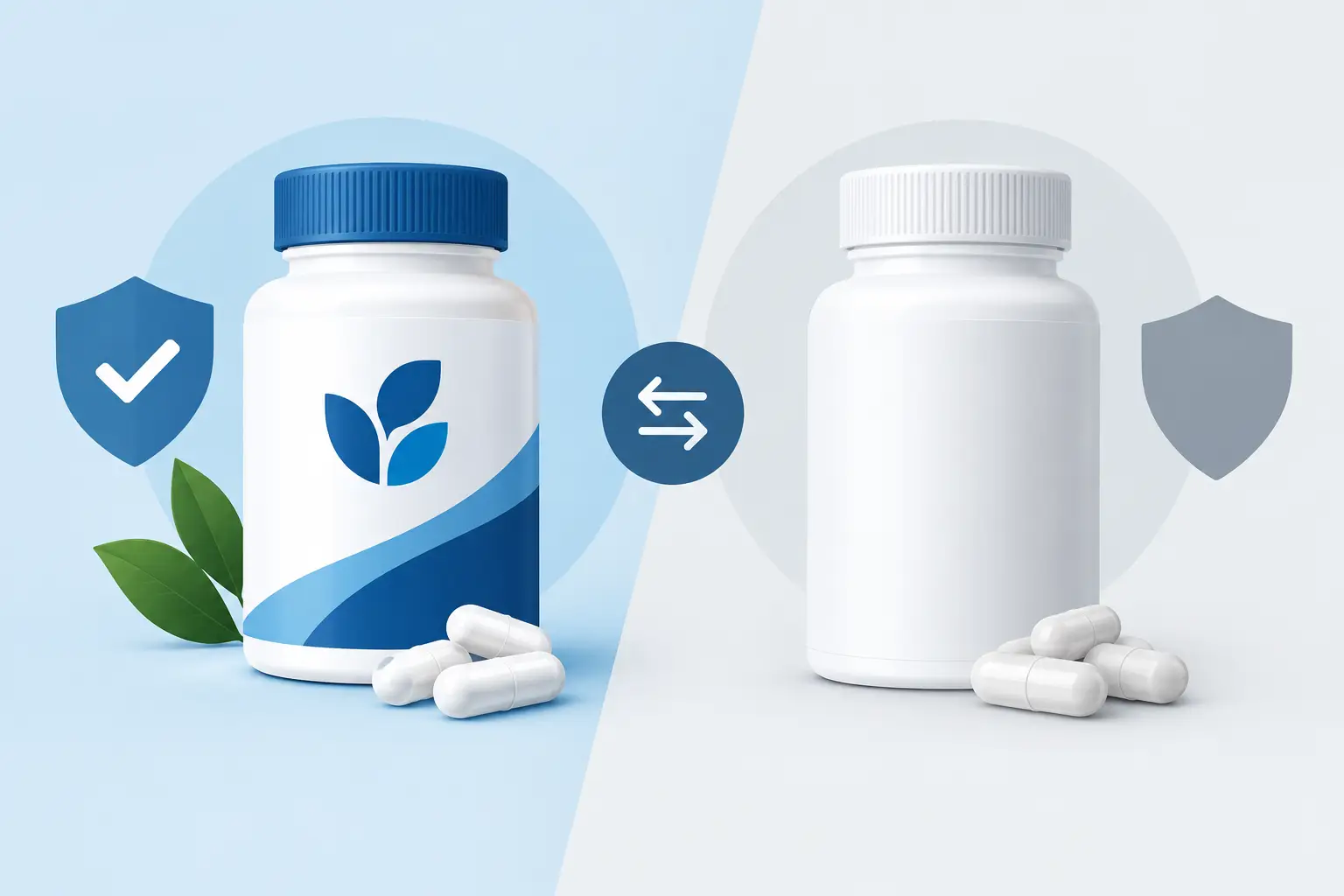
A plain pouch, a flashy label and a bargain price can all contain the same product claim. That does not make them equal purchases. With MK677 branded versus unbranded, the real question is not whether one label looks more premium. It is whether the seller can show consistency in the details that affect every order: identity, labelling, stock handling, price and delivery.
For UK buyers who already know the category, vague answers are not good enough. You want to know what you are buying, who stands behind it and what happens if there is a problem. That is where the difference usually appears.
What “branded” actually means
In this market, branded can mean several things. It may refer to a specialist retailer selling MK-677 under its own name, a recognised manufacturer with consistent packaging, or simply a seller that has applied a label to a generic product. Those are not automatically the same standard.
A brand is useful when it creates accountability. There should be a clear business identity, a repeatable product format and product information that stays consistent from one order to the next. If the label, claimed strength, bottle size and seller details keep changing, the name on the front means very little.
The strongest branded offers tend to make the basics easy to verify. You should be able to see the stated contents, quantity, batch or lot reference where applicable, storage guidance and a sensible way to contact the seller. Clear labelling is not a luxury. It is the minimum starting point for comparing products properly.
That said, branding is not proof on its own. A polished website and expensive-looking packaging can be marketing rather than evidence. Treat the brand as one trust signal, then check whether the operational details support it.
What unbranded MK677 usually looks like
Unbranded products are commonly sold in plain packaging, generic containers or listings with little information beyond a product name and a price. Sometimes this is deliberate. A seller may keep packaging basic to reduce costs. Sometimes it reflects a fragmented supply chain, where the person taking the order has limited visibility of the product before it reaches the customer.
Lower overheads can make an unbranded product cheaper. That can appeal if price is your only filter. The trade-off is that it may be harder to assess whether the same item will arrive next month, whether the stated contents are consistent between batches, or whether there is anyone accountable after payment has cleared.
An unbranded product is not automatically poor quality, just as a branded product is not automatically better. The practical issue is verification. The less information supplied before purchase, the more uncertainty you are being asked to accept.
MK677 branded versus unbranded: the checks that matter
Start with the label, not the sales copy. A useful label states what the product is presented as, the amount in the container, the stated amount per unit where relevant, and the seller or responsible business details. A listing that relies on phrases such as “premium grade” while avoiding specific product information gives you very little to assess.
Next, look at consistency across the seller’s own material. Does the bottle image match the description? Is the quantity stated in the same way on every page? Are product claims restrained and specific, or are they exaggerated enough to raise doubts about everything else? Reliable sellers do not need to hide basic facts behind buzzwords.
Batch information can also be useful, but it should be viewed realistically. A batch number is only valuable if it relates to a system the seller can explain. A document or certificate can add context, yet a PDF alone does not confirm the chain of custody for the exact item sent to you. Ask whether the documentation identifies the relevant batch, who carried out the testing, and whether the details match the product in front of you.
Finally, consider fulfilment. UK-held stock and tracked domestic delivery do not prove product identity, but they reduce a separate set of problems: unclear dispatch times, overseas customs delays, missing parcels and poor communication. When a seller says an item is in UK stock, that should mean they can dispatch it promptly from the UK, not that they will source it after you pay.
Price is a signal, not a verdict
Very cheap products attract attention because the category often carries a wide range of prices. But the lowest price can come with hidden costs: slow dispatch, no meaningful customer support, unstable stock or no confidence that the next order will match the last one.
At the other end, a high price does not create quality by itself. You are paying for more than a logo only when the seller provides clear information, predictable order handling and a level of accountability that is visible before checkout.
A fair comparison looks at the full order. Check the stated quantity, delivery charge, dispatch location, tracking, packaging and the seller’s approach to issues. A modest difference in headline price can be worthwhile if it removes uncertainty around stock and delivery. Equally, premium pricing without better information is just premium pricing.
Why repeatability matters more than presentation
Most experienced buyers are not looking for a dramatic one-off deal. They want the confidence that a product description will still mean the same thing on the next order. That is where a specialist seller has an advantage over an anonymous marketplace listing.
Repeatability comes from processes: standardised product information, stable packaging, stock control and direct customer service. It is less exciting than a glossy label, but it is what makes buying simpler. You should not have to compare a new bottle photo, a changed claimed amount and a different dispatch country every time you reorder.
This is also why a narrow specialist offering can be reassuring. A retailer focused on one category has more reason to keep its product details, stock position and fulfilment process consistent than a broad seller that adds and removes items constantly. The test remains the same: can they show that consistency clearly?
Questions worth asking before you buy
Before choosing between branded and unbranded MK-677, ask whether the product information is specific, whether the seller is identifiable and whether stock is genuinely held in the UK. Look for a clear order process and realistic delivery expectations, not just a promise of fast postage.
It is also reasonable to ask how customer queries are handled and what happens if an item arrives damaged or incorrect. The response tells you a great deal. A dependable retailer answers directly. A seller who avoids straightforward questions about labelling, dispatch or product details is asking you to take the risk for them.
For many buyers, a branded specialist option is the more practical choice because it provides a visible point of accountability. MK677 Direct UK is built around that principle: clear product presentation, UK-held stock and tracked domestic delivery rather than the uncertainty of anonymous overseas listings. But the standard should apply to every seller you consider, not only the one with the best branding.
Keep the legal and health context clear
MK-677 is not a licensed medicine in the UK. Product availability should never be confused with medical approval, and marketing language should not be treated as medical advice. Anyone with a medical condition, anyone taking medication, or anyone unsure about potential risks should speak with an appropriately qualified healthcare professional.
Be especially wary of sellers making sweeping promises about muscle gain, fat loss, recovery, sleep or hormone outcomes. Those claims may be tempting, but they are not a substitute for proper evidence, individual medical advice or transparent product information. Responsible buying starts with clear expectations and a refusal to let a sales page make decisions for you.
The better choice is rarely the loudest label or the cheapest listing. Choose the seller that makes it easiest to verify the basics, delivers from where it says it does and gives you a clear answer when you ask a clear question.